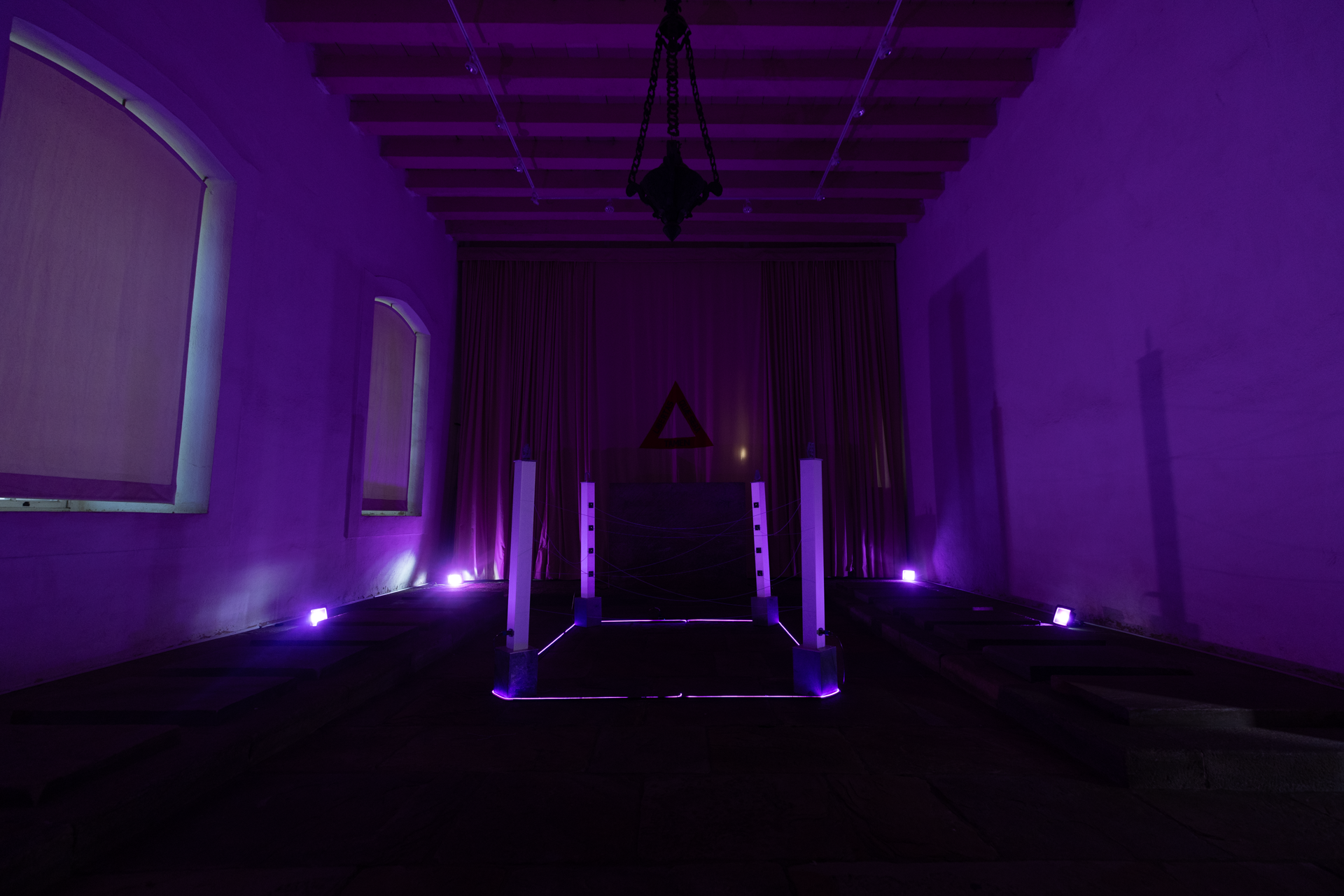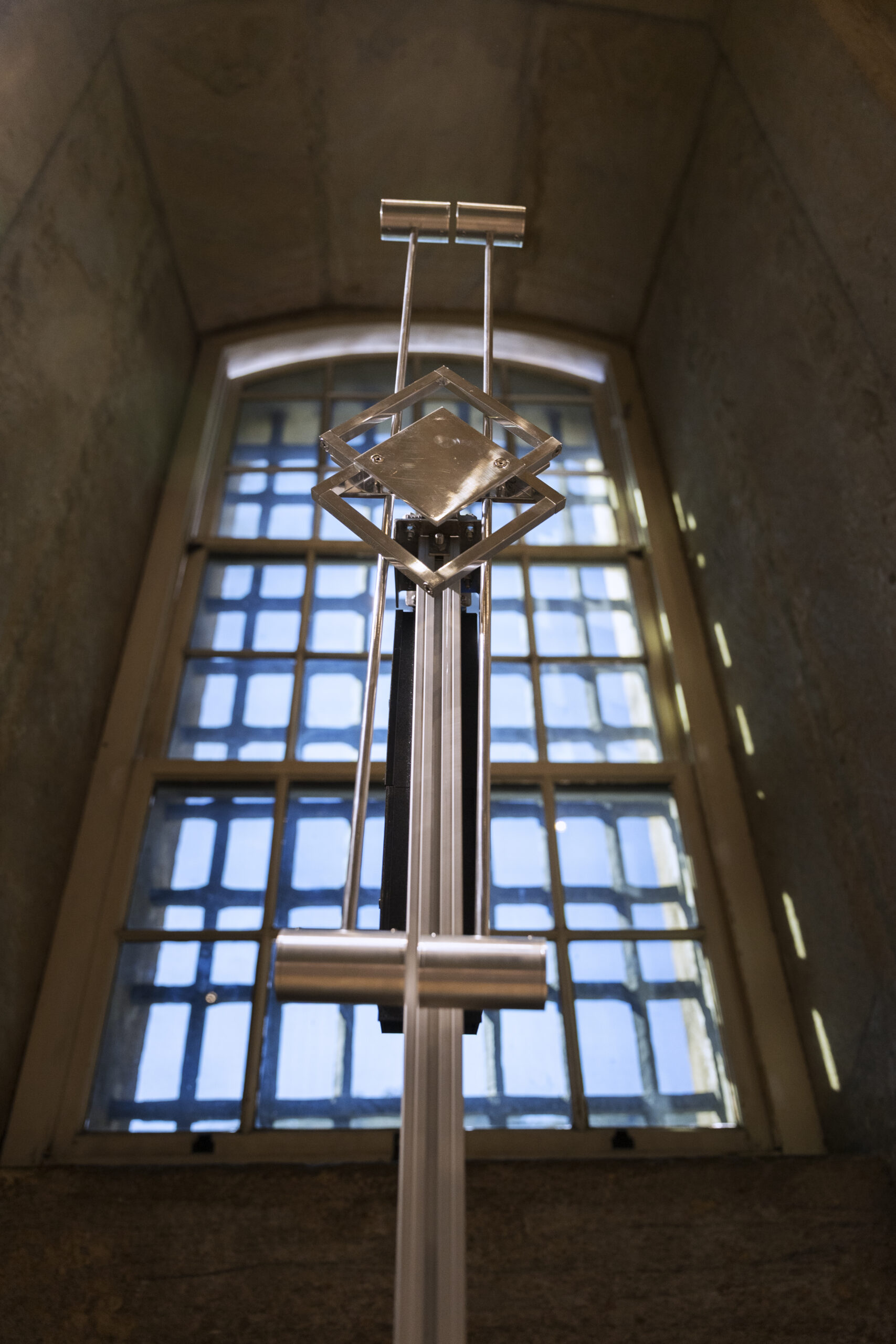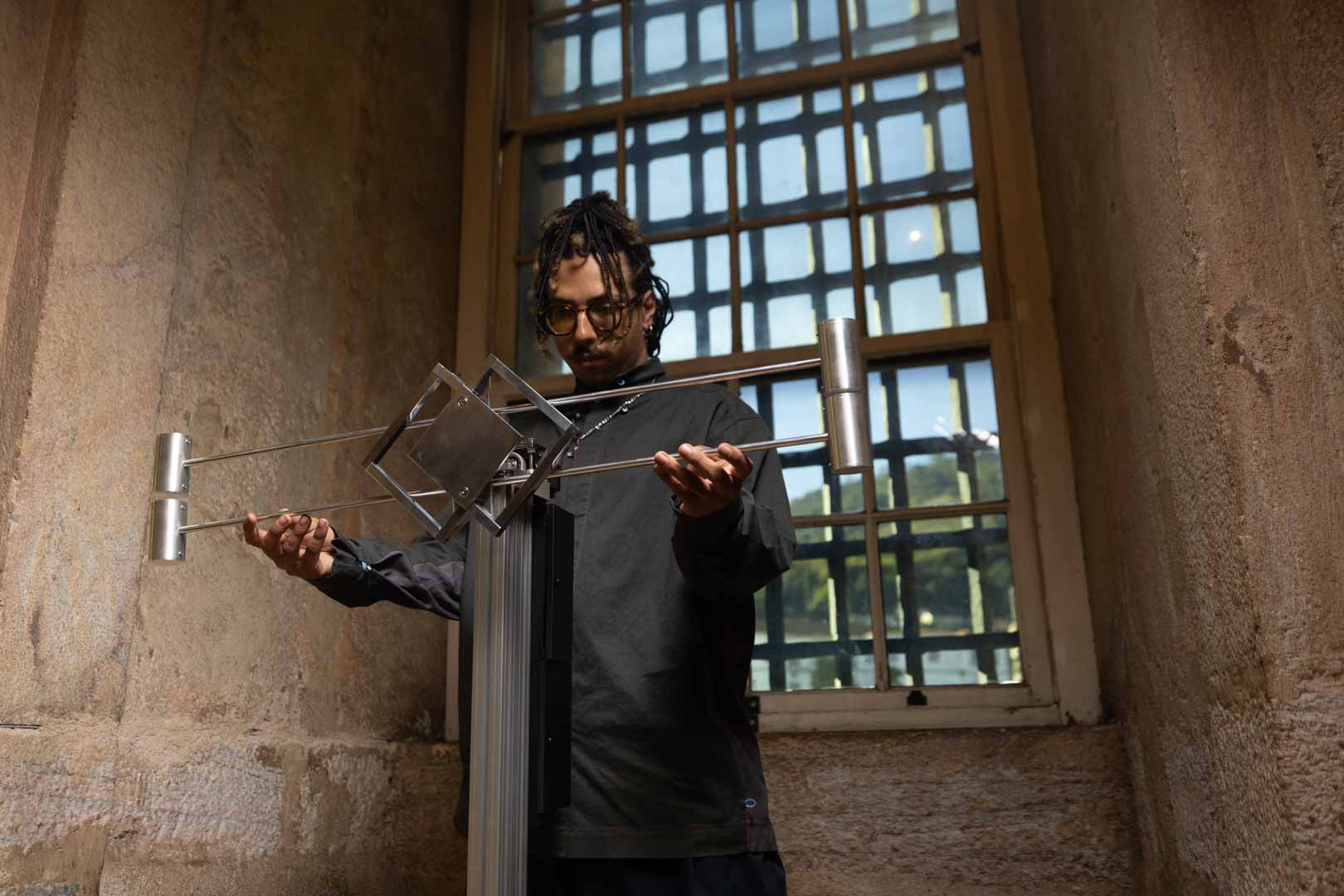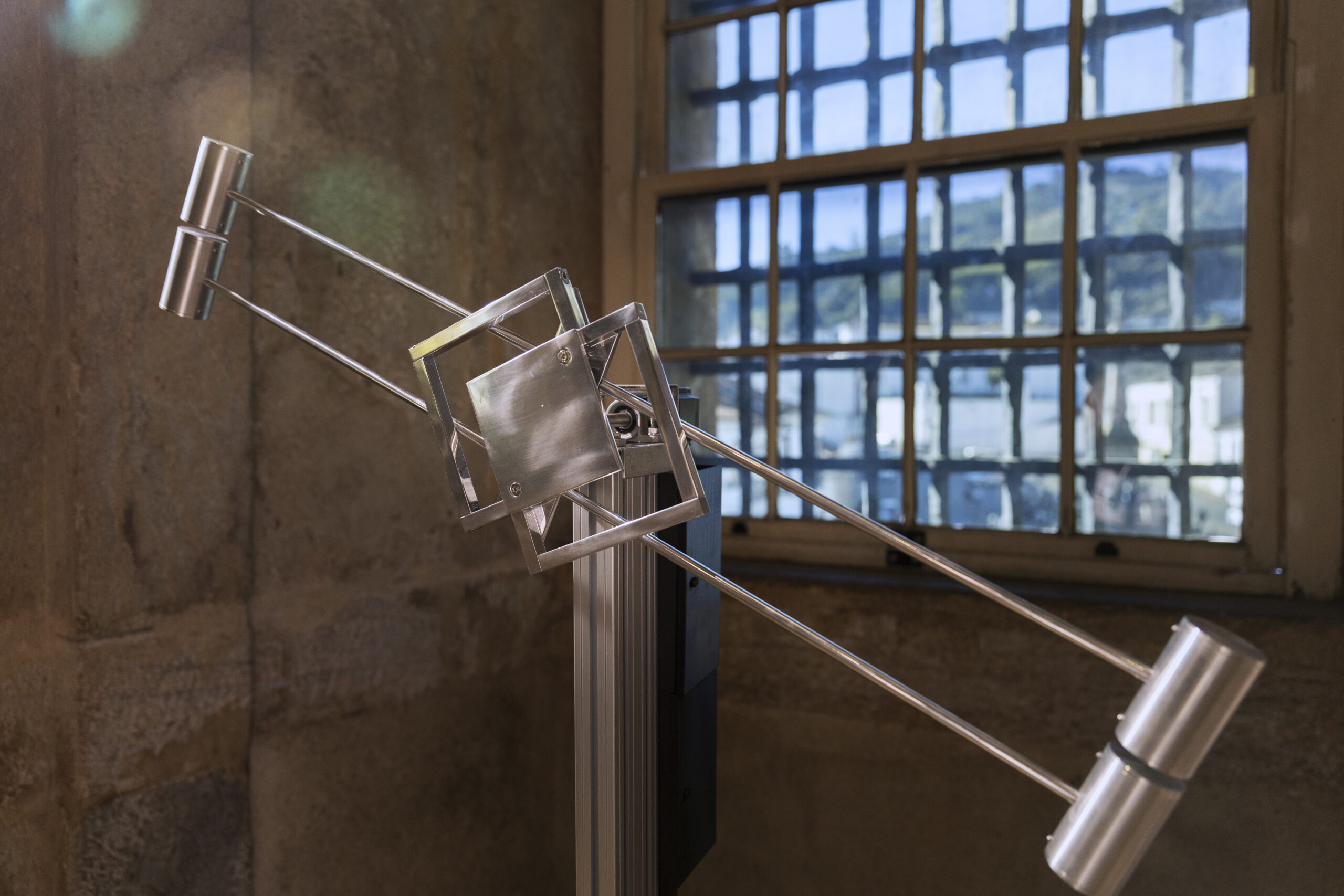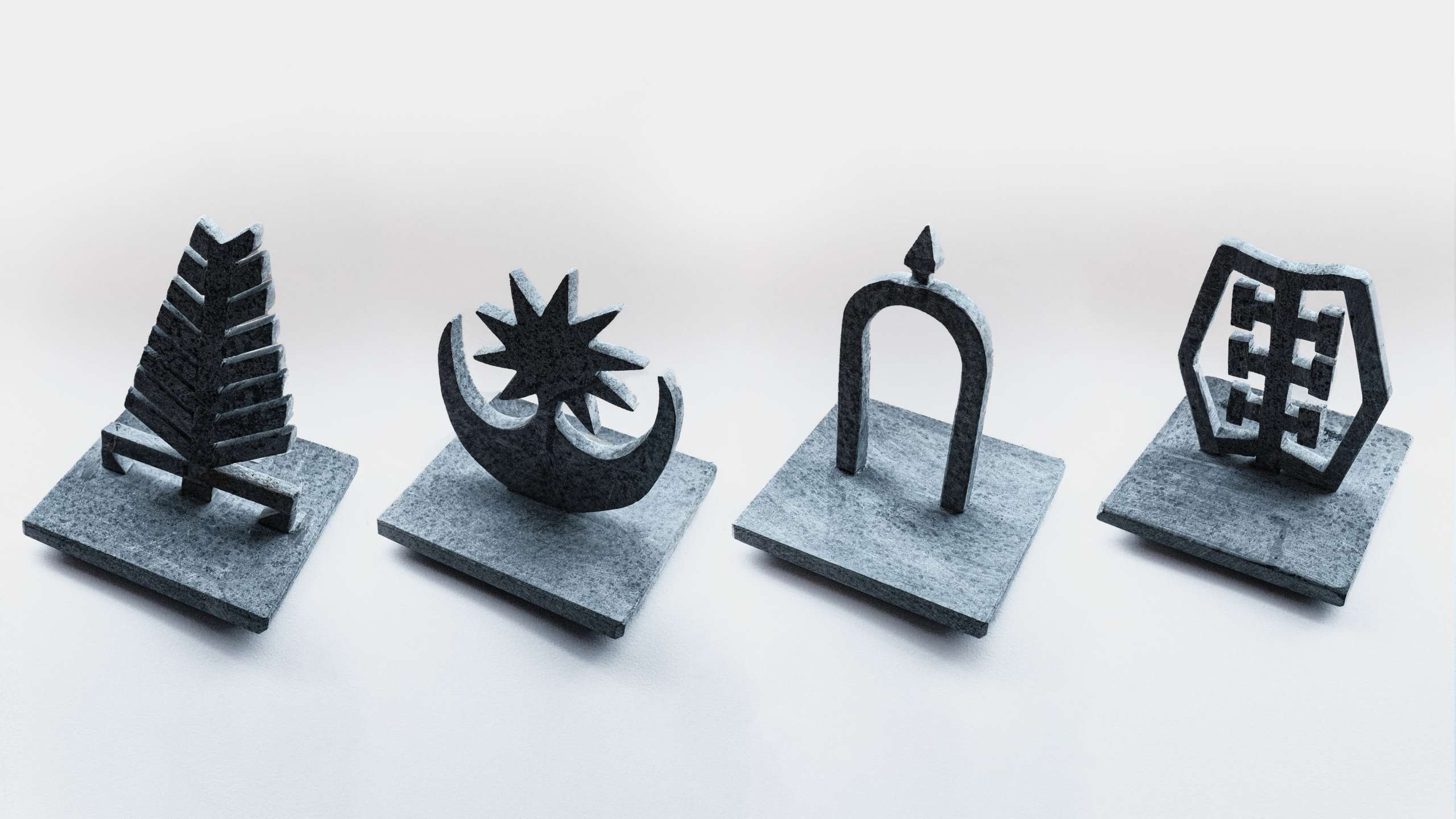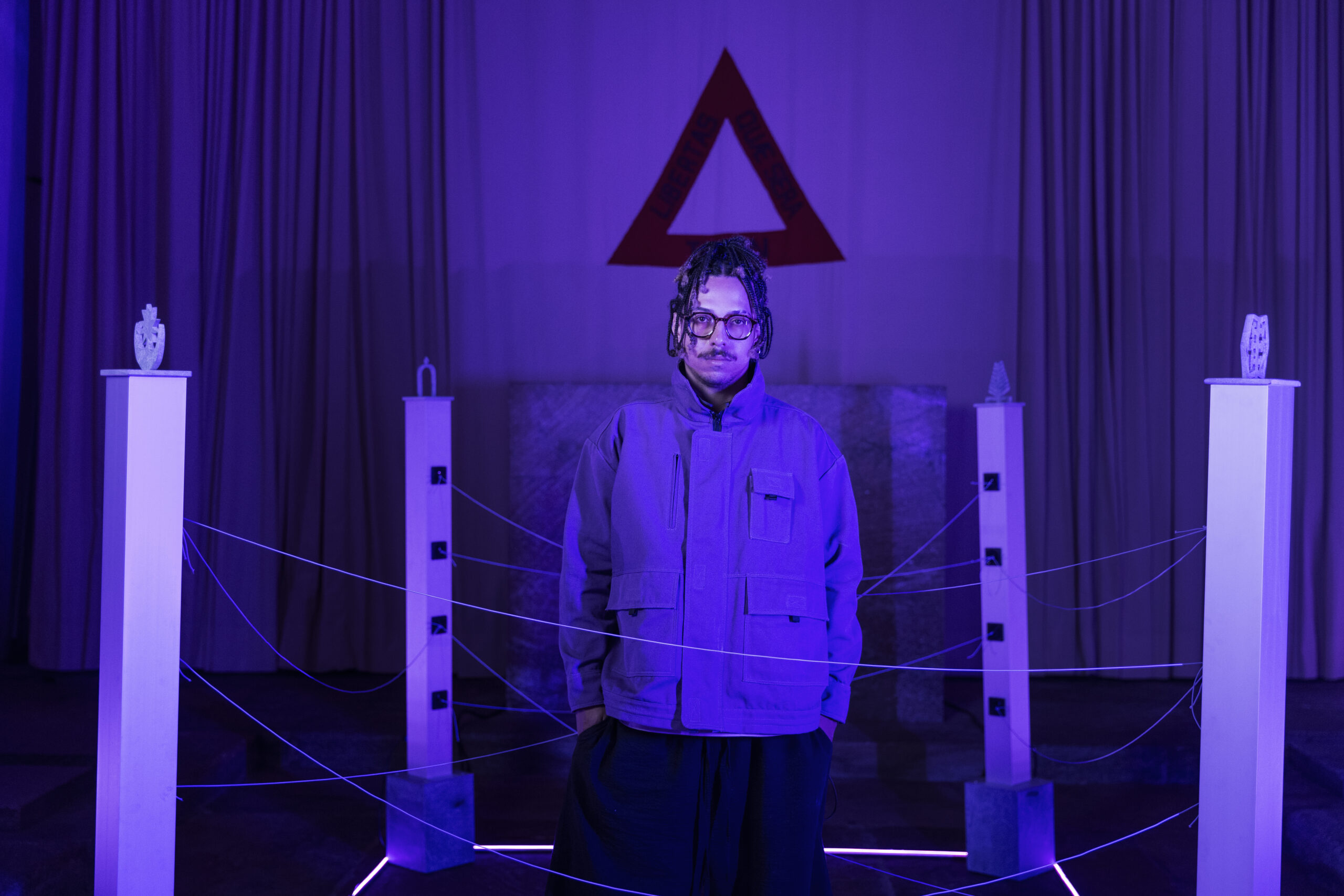
A instalação Miserere No. 1 talvez sintetize esse gesto. Ao ocupar uma das salas centrais do Museu da Inconfidência, a obra reinscreve naquele espaço a música composta por Manoel Dias de Oliveira, mestre negro cuja produção integrou a tradição sacra mineira. Quatro torres de alumínio conectadas por cordas vibratórias transformam a arquitetura em caixa de ressonância. Sobre elas repousam símbolos Adinkra, evocando cosmologias africanas que sobreviveram sob diferentes formas na cultura mineira. O panteão dos inconfidentes tem seu eixo deslocado da pedra para a vibração, da permanência para a escuta.
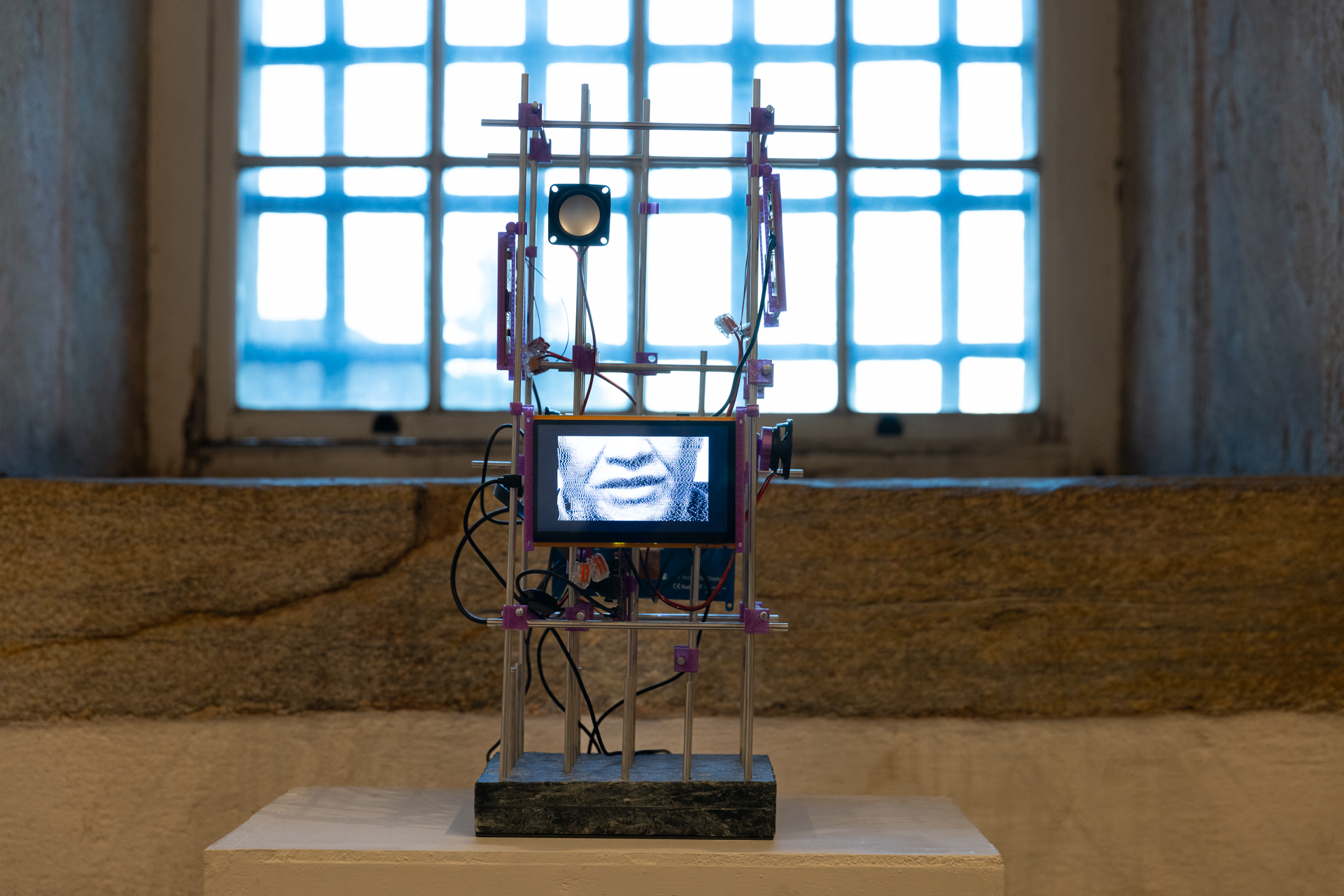
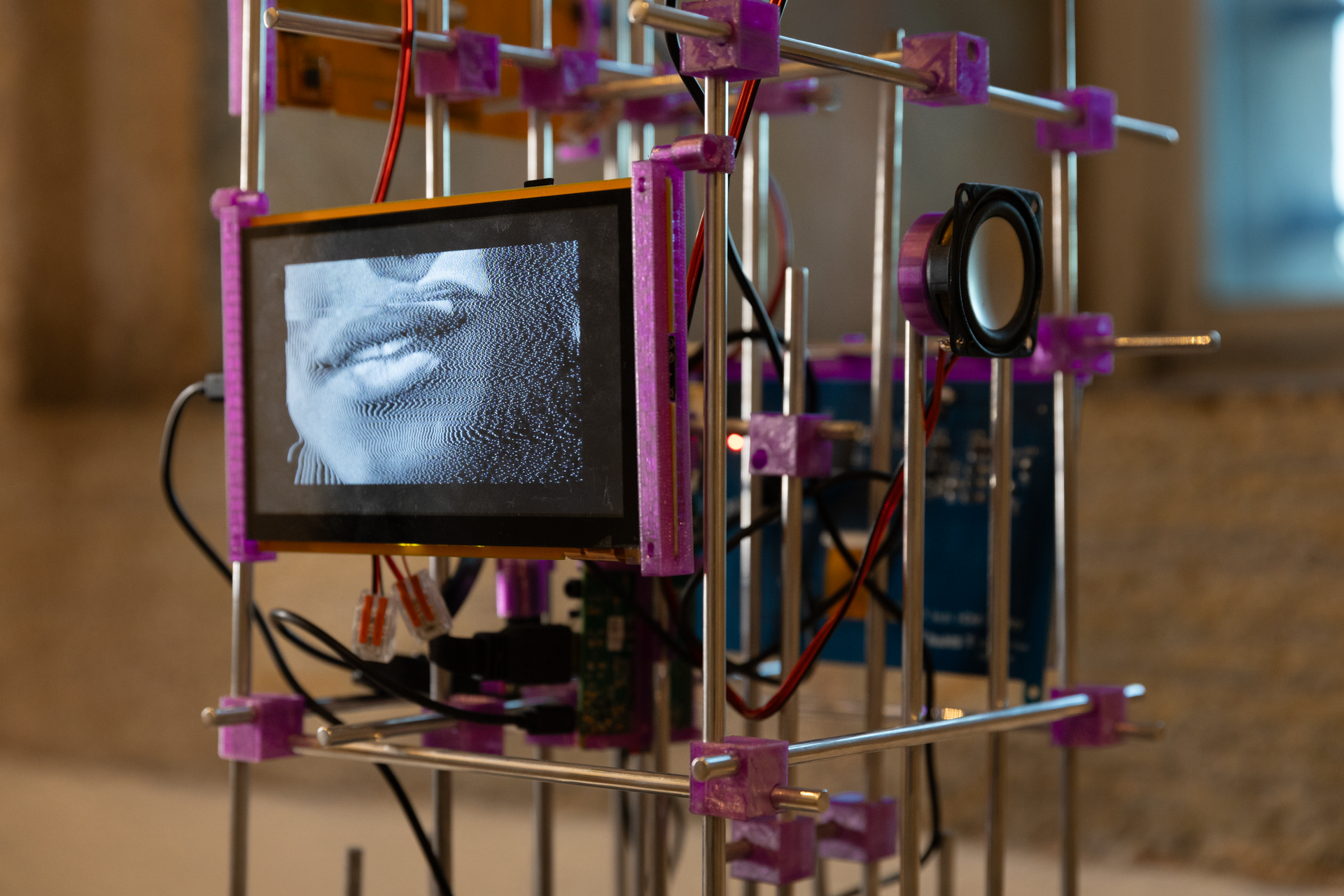
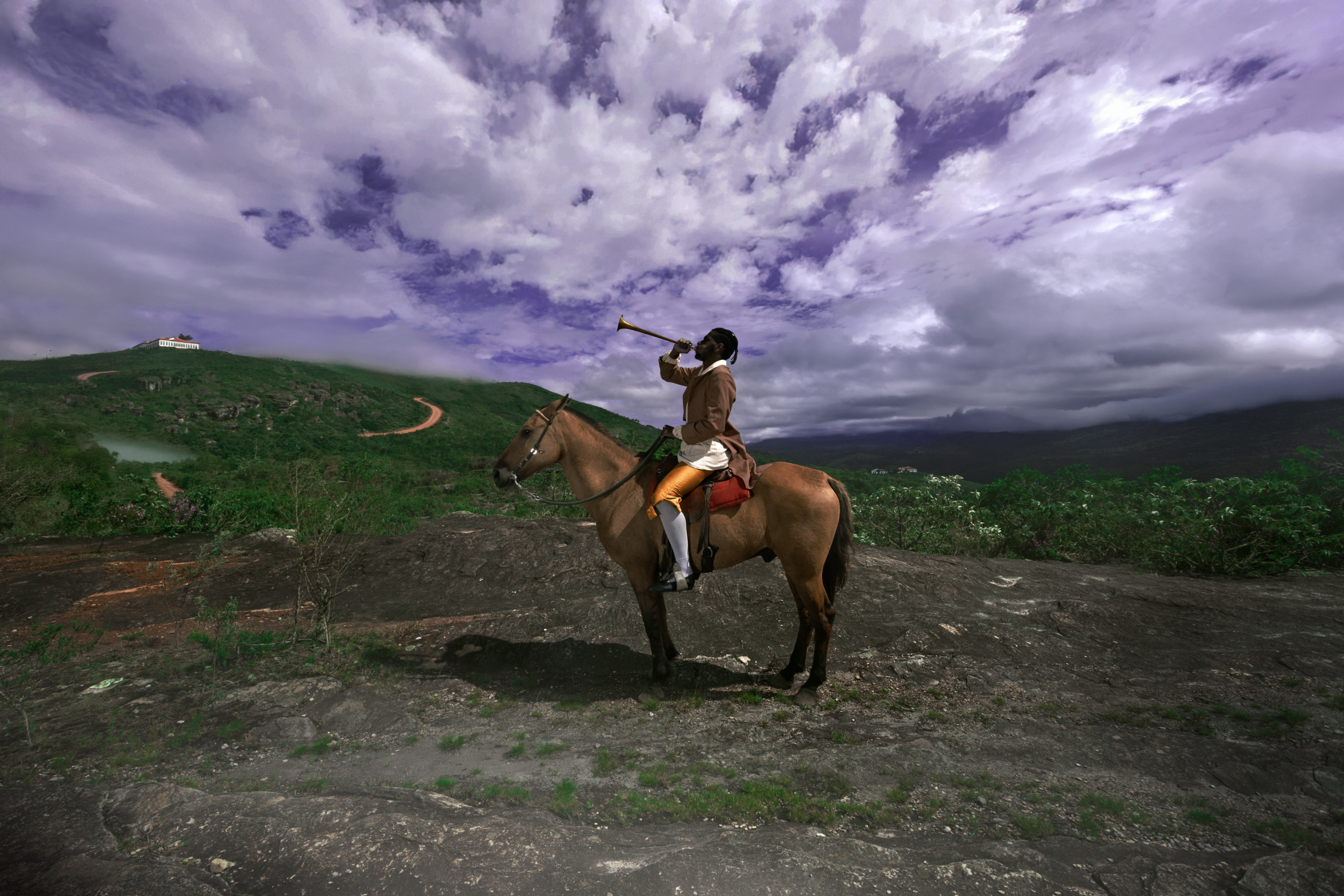
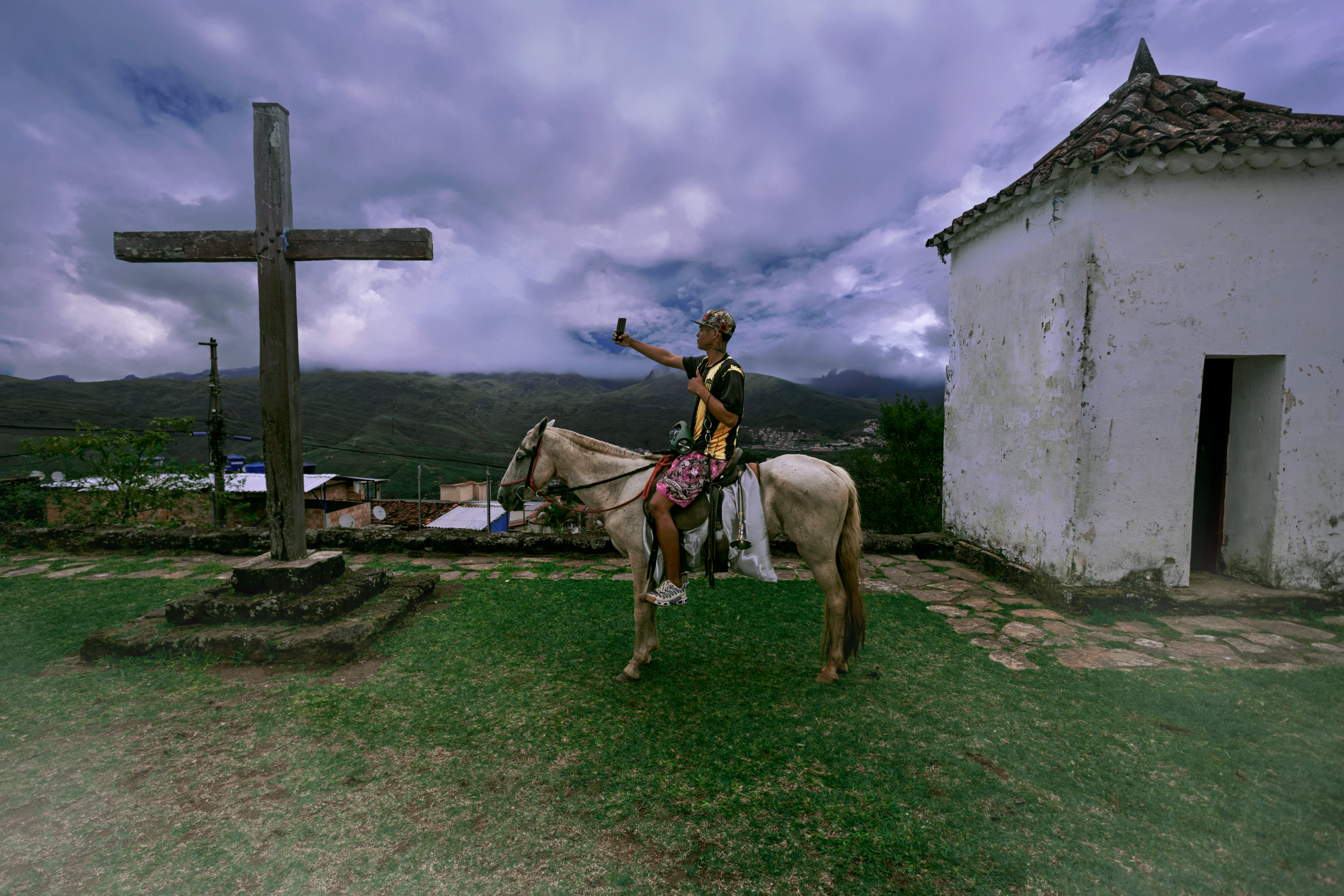
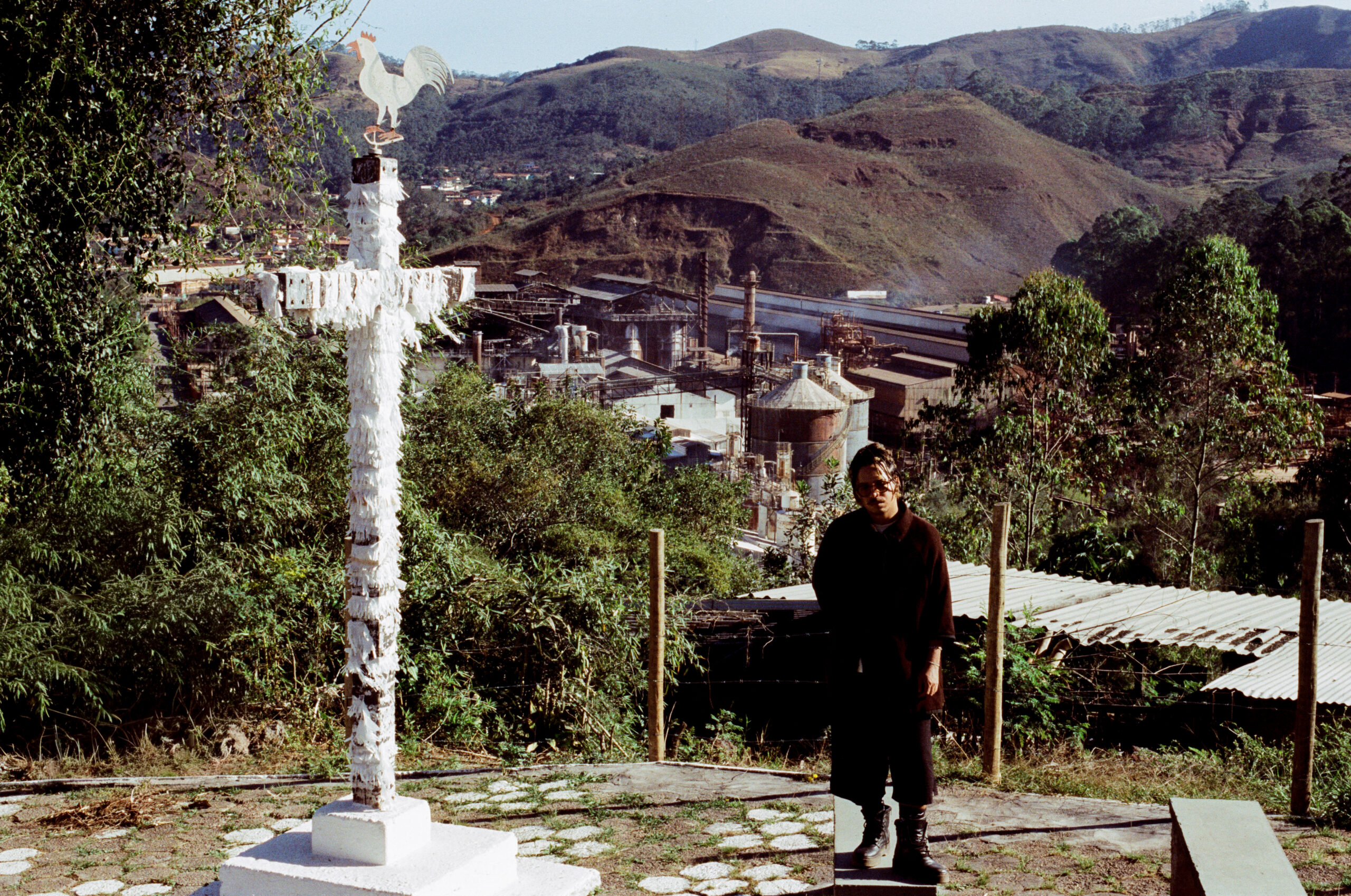
Essa mesma operação reaparece em diferentes dimensões ao longo da exposição. Em Trust the Mouth, a palavra oral confronta os sistemas de vigilância e registro; nas fotografias Cavaleiro I e Cavaleiro II, os antigos trombeteiros coloniais encontram seus correspondentes contemporâneos nos jovens que percorrem as periferias montados a cavalo e acompanhados por caixas de som; em Jantar, a mesa histórica do museu volta a ser objeto de uso simbólico, convertendo-se em suporte para refletir sobre as desigualdades espaciais produzidas pela mineração industrial; em Gunga I, o instrumento ritual do Congado aparece como extensão do corpo e da memória coletiva. Cada trabalho evidencia que os sons não apenas acompanham a história: eles produzem territórios, organizam comunidades e disputam formas de pertencimento.
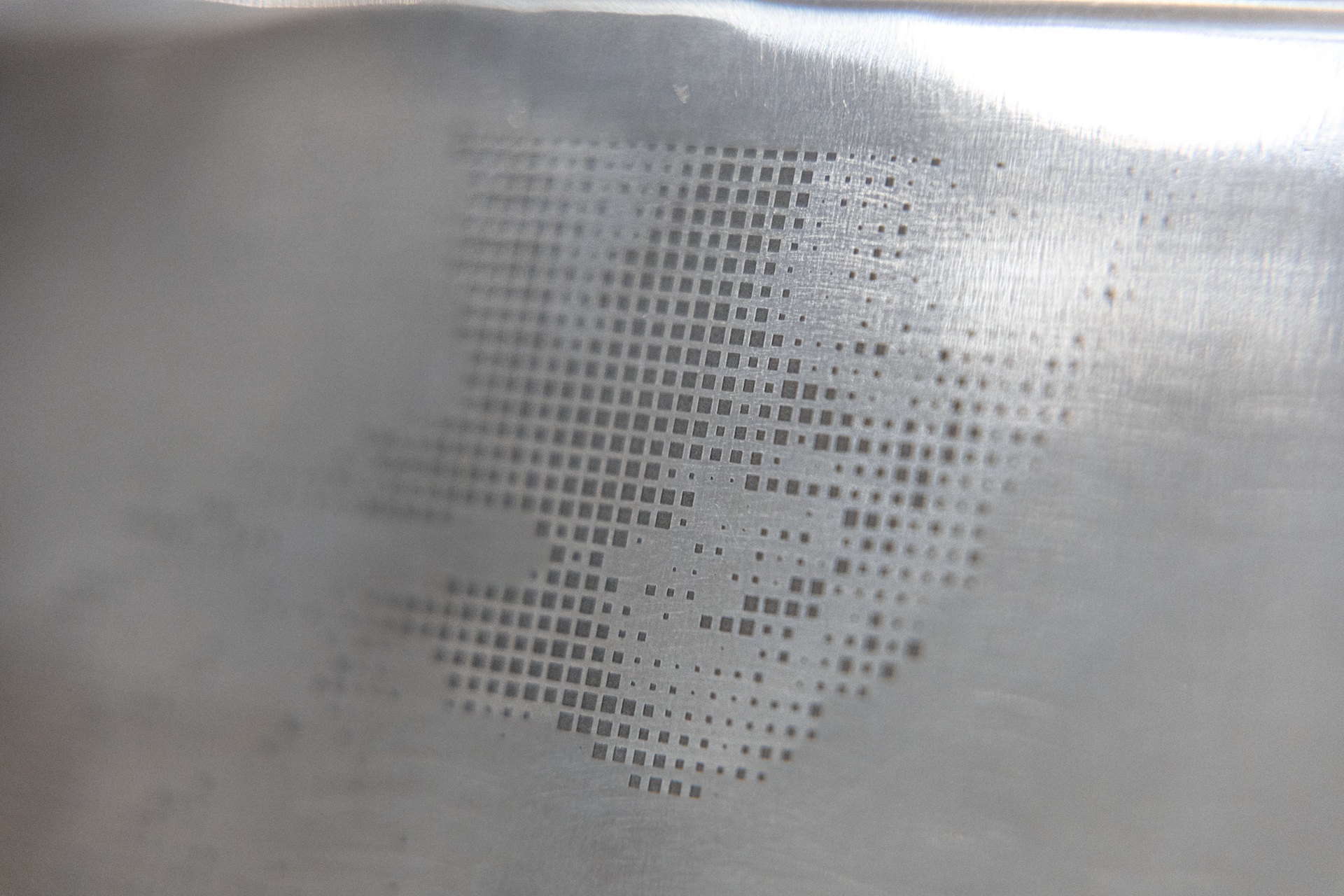
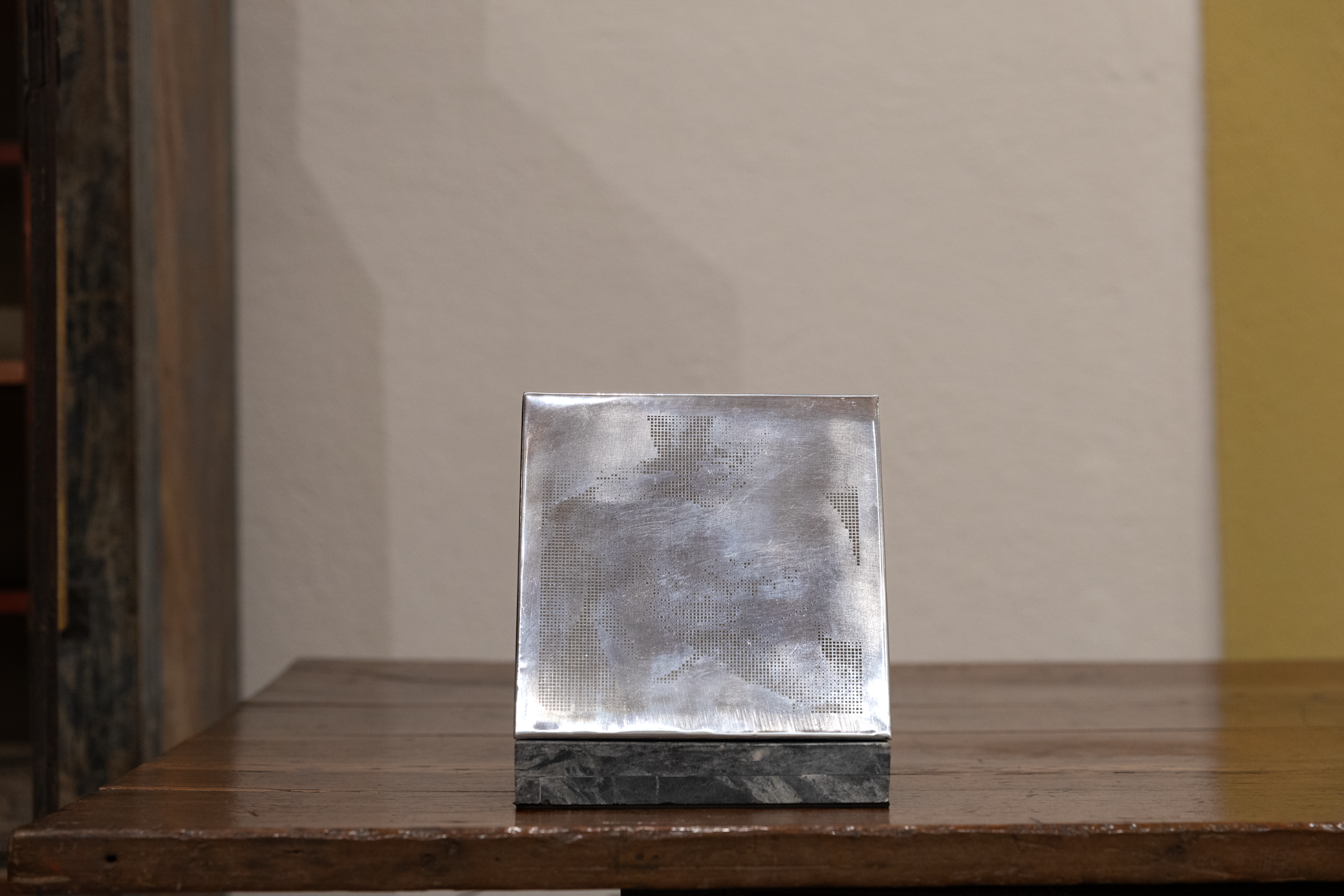
The choice of materials reinforces this political dimension. Thus, aluminum—often called the "second gold" of Minas Gerais—bridges the colonial economy with contemporary mining. If gold structured the formation of Vila Rica, aluminum marked the state's industrialization and the lived experience of thousands of workers subjected to the incessant noise of factories. Alongside it, soapstone—extracted and carved by local artisans since the 18th century—reinscribes manual knowledges historically bound to the territory. In this way, the encounter between these materials produces a critical archaeology of Minas's very matter.
Throughout the exhibition, one realizes that noise does not appear as a metaphor for disorder. On the contrary, it constitutes a form of social organization. It is through music that Black brotherhoods built recognition; through oral tradition that communities preserved memories; through the strike of the gunga that the Congado articulates body and spirituality; through sound systems that young people occupy territories invisible to today's tourist circuit; through the sonic satire of Bandalheira that political control was temporarily interrupted during the military dictatorship. Such sounds are not remnants of history, but technologies of survival.
By shifting the Museu da Inconfidência from a space primarily dedicated to the gaze toward an expanded field of listening, Ruídos se Organizam (Noises Organize Themselves) poses a fundamental question: what remains inaudible when we transform history into heritage? The answer does not consist of filling gaps or definitively correcting the institutional narrative. What the exhibition offers is another possibility for coexisting with the past: understanding that all memory is also a struggle over the frequencies we choose to amplify.
In light of this, the exhibition reveals that the silence of the Museum has always been crossed by noises that official history preferred not to hear. The work of Ítalo Almeida consists precisely in organizing them so that we can listen to them with attention.